
What to Do to Stop Your Dog From Barking at Strangers
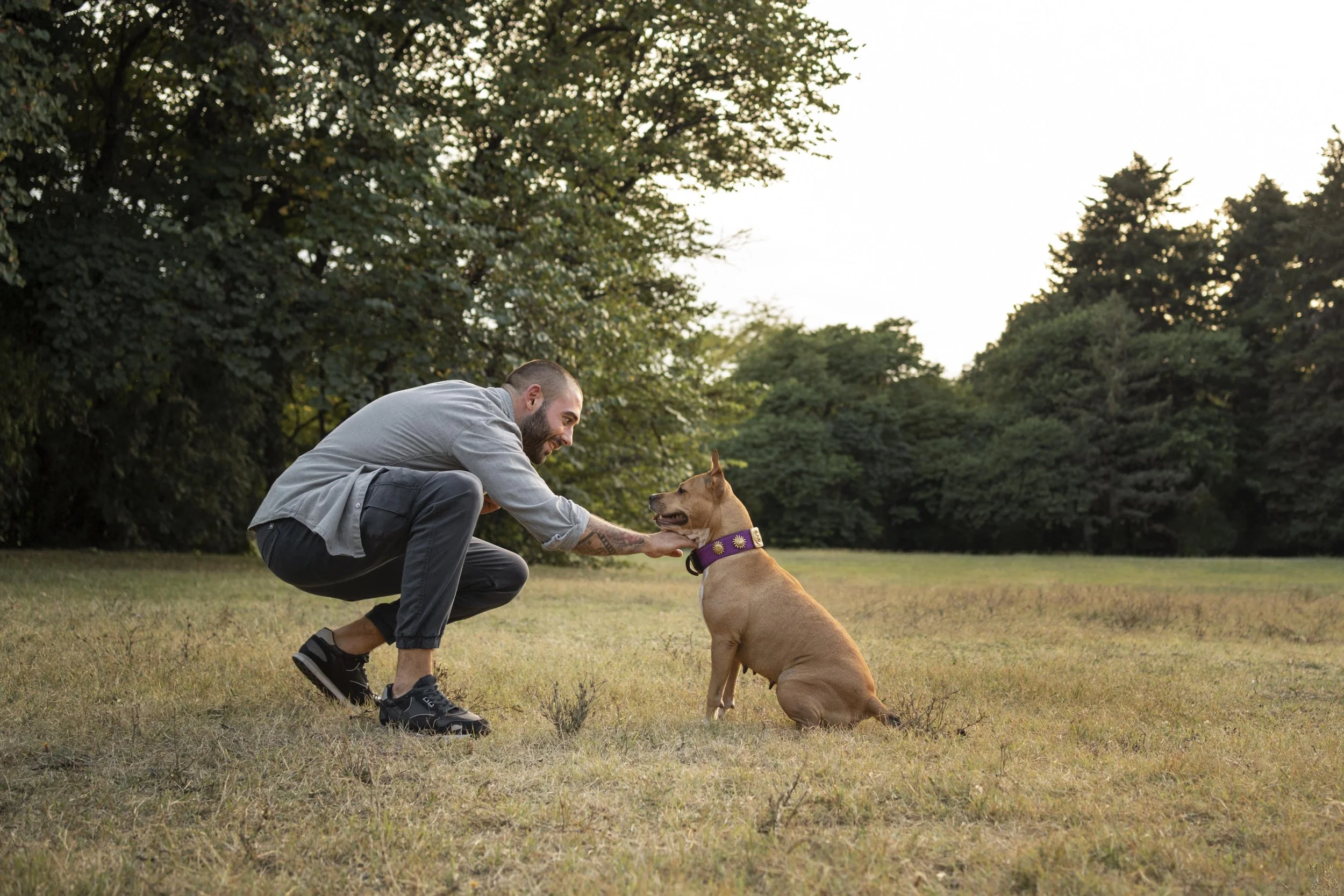
Every walk becomes a performance. Your dog spots someone half a block away and launches into a barking frenzy that echoes down the street. The mail carrier approaches your door, and your otherwise sweet companion transforms into a four-legged alarm system that won't turn off.
If this sounds familiar, you're not alone. Barking at strangers is one of the most common behavioral complaints among dog owners, and it creates stress for everyone involved: you, your dog, your neighbors, and the innocent pedestrians just trying to go about their day.
Here's the good news: this behavior isn't a permanent personality flaw. It's a communication pattern driven by specific emotions and triggers that can be addressed with the right training approach. Let's break down why your dog barks at strangers and, more importantly, what you can actually do about it.
Understanding Why Your Dog Barks at Every Passerby
Before you can solve the barking problem, you need to understand what's driving it. Dogs don't bark at strangers to annoy you or because they're "bad dogs." They're responding to internal emotions like fear, anxiety, territorial instinct, or protective drive.
The key to successful training lies in identifying why your dog barks, because a fear-based barker needs a completely different approach than a territorially motivated one. Treating the symptoms without addressing the underlying emotion is like putting a bandaid on a broken bone. It might cover the problem temporarily, but it won't create lasting change.
Identify the Motivation Behind Your Dog's Barking
Fear and Anxiety-Based Barking
Dogs with insufficient socialization during their critical developmental period (3-14 weeks) often perceive strangers as potential threats. If your puppy didn't have positive, varied experiences with different people during this narrow window, they may have developed a default fear response to unfamiliar humans.
Past negative experiences matter too. A dog who was startled, stepped on, or frightened by a stranger even once can generalize that fear to all unfamiliar people.
Watch your dog's body language for fear signals:
Tucked tail or tail held low
Pinned-back ears
Backing away while barking
Hiding behind you while vocalizing
Wide "whale eyes" showing the whites
Fear-based barking often intensifies when strangers approach directly, make sudden movements, or reach toward the dog. Your dog isn't trying to be aggressive. They're saying, "Please stay away, you're scaring me!"
The critical point here: punishing fear-based barking increases anxiety and worsens the behavior. You need to build your dog's confidence and change their emotional response to strangers, not suppress the symptoms.
Territorial and Protective Barking
This type of barking sounds different. It's often deeper, more forceful, and happens in specific locations.
Dogs naturally alert their pack to potential intruders, but some develop excessive territorial responses. If your dog barks at strangers near windows, doorways, or yard boundaries, they're saying, "This is my space, and you don't belong here."
Certain breeds have stronger territorial instincts. Guard dog breeds (Rottweilers, Dobermans, German Shepherds) and herding breeds (Australian Cattle Dogs, Border Collies) were specifically bred to be alert and protective.
Here's the problem: territorial barking often worsens over time without intervention because, from your dog's perspective, it works. The mail carrier leaves after your dog barks. The jogger passes by after your dog sounds the alarm. Your dog believes their barking successfully drove away the threat, reinforcing the behavior cycle.
Foundation Training for Calm Behavior Around Strangers
Teach the "Quiet" Command Consistently
The "quiet" command isn't about yelling at your dog to shut up. It's about teaching them that silence earns rewards.
Start training in low-distraction environments before attempting this during actual stranger encounters. Have a family member knock on an interior door or create a mild trigger that causes a few barks.
Wait for a natural pause in barking (even just one second), immediately say "quiet" in a calm, normal voice, and reward that moment of silence with high-value treats like chicken, cheese, or hot dogs.
Timing is everything. You must capture the silence, not the barking. If you're fumbling for treats while your dog is still barking, you're accidentally rewarding the noise.
Practice with friends acting as "strangers" approaching at varying distances. Start far away where your dog barely reacts, and gradually decrease distance over multiple sessions as your dog learns the quiet command reliably.
Never yell or punish during barking episodes. Yelling adds stress and arousal, which makes reactive behavior worse. Your dog may stop momentarily, but you've increased their anxiety about the situation.
Implement the "Look at Me" or Focus Command
This command is pure gold for reactive dogs. It redirects your dog's attention away from the trigger (the stranger) and back to you before the barking cycle begins.
Start indoors in a boring environment. Hold a treat near your eyes, say "look at me," and the moment your dog makes eye contact, mark it with "yes!" and reward immediately.
Practice until your dog can hold eye contact for several seconds. Then move training to progressively more challenging environments: your backyard, a quiet street, busier areas.
The magic happens when you use this command before your dog starts barking. As soon as you spot a stranger approaching and your dog notices them, say "look at me." When your dog chooses to focus on you instead of fixating on the stranger, reward heavily.
This isn't just distraction. You're teaching your dog an alternative behavior and building a pattern: "When strangers appear, I look at my person and good things happen."
Desensitization and Counter-Conditioning Techniques
Create Positive Associations With Stranger Encounters
Counter-conditioning is the process of changing your dog's emotional response from negative (threat/fear) to positive (good things happen).
First, identify your dog's threshold distance. This is how close a stranger can be before your dog reacts. For some dogs, it's 100 feet. For others, it's 10 feet. You need to know your dog's specific threshold.
Position yourself just outside that threshold distance where your dog notices strangers but hasn't started barking yet. The moment a stranger becomes visible, start feeding continuous high-value treats. Not one treat. Continuous feeding, one piece after another.
The stranger being present predicts treats. Feed, feed, feed the entire time the stranger is visible.
The moment the stranger disappears from view, the treats stop completely. This creates a clear cause-and-effect connection in your dog's brain: stranger appears equals treat party, stranger leaves equals treats stop.
Over weeks (not days), gradually decrease the distance to strangers as your dog remains calm and focused on the rewards rather than reactive to the people.
Systematic Desensitization Through Gradual Exposure
Desensitization means exposing your dog to the trigger at such a low intensity that they don't react, then gradually increasing intensity over time.
Work with a helper to create controlled exposures rather than relying on unpredictable real-world encounters. Your helper can approach at specific distances, speeds, and angles based on your training plan.
Start at a distance where your dog notices strangers but remains under threshold. Maybe that's 50 feet away. Your helper walks parallel to you at that distance. No reaction? Great. Repeat several times.
Next session, try 45 feet. Still calm? Progress continues. Your dog tenses up and stares intensely? You've moved too fast. Go back to 50 feet.
Watch for early stress signals: stiffening body, locked stare, raised hackles, or low growling. These signs mean you need to increase distance before actual barking starts.
Progress at your dog's pace. Some dogs move through distances quickly. Others need several sessions at the same level. Rushing creates setbacks.
Management Strategies to Prevent Rehearsal of Barking
Control the Environment During Training
Every time your dog barks at a stranger, they're practicing and reinforcing the behavior. Management prevents rehearsal while you implement training.
Close curtains or use window film to block your dog's view of passersby. If your dog posts up at the front window all day barking at every person, cat, and leaf that moves, they're strengthening that neural pathway.
Use white noise machines or calming music to mask sounds of people approaching your home. Many dogs react to footsteps or voices before they even see anyone.
Create a designated "calm zone" away from front windows and doors. This might be a comfortable bed in a back room where your dog can relax without constant stranger exposure.
Avoid walks during peak neighbor activity times when you're first implementing training. If your neighborhood is bustling at 5 PM with joggers, dog walkers, and kids getting off the school bus, that's not the time for early training walks. Choose quieter times until your dog's skills improve.
Use Physical and Mental Exercise Strategically
A tired dog has lower arousal levels and reacts less intensely to triggers.
Provide vigorous exercise through fetch, running, or swimming before training sessions or anticipated stranger encounters. A dog who has burned off excess energy has more mental capacity for learning new responses.
Mental stimulation matters too. Puzzle toys, nose work games, and training sessions burn energy without physical exertion. A 15-minute scent game can tire your dog as much as a 30-minute walk.
Schedule walks during quieter times initially, gradually building up to busier periods as your dog's training progresses.
Important note: adequate exercise doesn't replace training, but it creates better conditions for learning new behaviors. A frantic, pent-up dog can't focus on your "look at me" cue.
Advanced Techniques and When to Seek Professional Help
Teach Alternative Behaviors to Replace Barking
You can't bark and hold a toy simultaneously. Train your dog to grab a specific toy when the doorbell rings. Practice this extensively with staged doorbell rings and generous rewards.
Teach a solid "settle" command where your dog goes to their bed or mat and lies down on cue. When strangers approach during walks, you can send your dog to a settled position instead of allowing them to fixate and bark.
Body blocking techniques help too. If your dog tries to rush toward a stranger to bark, calmly step in front of them, creating a physical barrier and claiming the space. This communicates, "I've got this, you don't need to react."
Consistency across all family members is non-negotiable. If one person allows barking while another corrects it, your dog receives mixed messages and training progress stalls.
Recognize When Professional Training Is Necessary
Some situations require expert intervention:
Seek professional help immediately if:
Your dog shows aggressive body language including lunging, snapping, or biting attempts
Fear-based barking hasn't improved after 4-6 weeks of consistent training
You feel overwhelmed or unsure whether your approach is helping or harming
Certified Applied Animal Behaviorists or veterinary behaviorists can address complex reactivity cases. Some dogs benefit from anti-anxiety medication prescribed by veterinarians alongside behavior modification.
Professional trainers create customized protocols based on your specific dog's triggers, learning style, and severity of reactivity. They also teach you proper technique, because small errors in timing or approach can sabotage training.
Building a Calmer, More Confident Companion
Stopping your dog from barking at strangers isn't about dominance or forcing compliance. It's about understanding the emotional drivers behind reactive behavior and teaching your dog that strangers predict good things, not threats.
This process requires patience, consistency, and realistic expectations. You won't fix weeks or months of rehearsed behavior in a few days. But with dedicated training and management, you can transform your anxious or territorial dog into a confident companion who feels safe and secure even when unfamiliar people are nearby.
Progress might look like this: your dog notices a stranger, glances at them briefly, then looks back at you expectantly for a treat. That's the goal. Not a dog who ignores strangers completely, but a dog who has learned a better, calmer response pattern.
FAQs
-
The timeline varies dramatically based on the severity of the behavior, your dog's age, how long they've been rehearsing the barking, and your training consistency. Mild cases with consistent daily training might show noticeable improvement in 2-4 weeks. Moderate to severe reactivity often requires 2-3 months of dedicated work. Dogs with deep-seated fear or those who've been barking at strangers for years may need 6 months or longer. Progress isn't linear. You'll have good days and setback days. What matters is the overall trend over weeks.
-
No. Bark collars (shock, citronella, or vibration-based) suppress the symptom without addressing the underlying emotion. If your dog barks from fear, a bark collar adds punishment to an already frightening situation, increasing anxiety and potentially creating worse behavioral problems. If your dog barks territorially, the collar may stop the noise temporarily, but the emotional response remains unchanged, and dogs often become collar-wise (learning to bark when it's off). Focus on training methods that change your dog's emotional response to strangers rather than punishing communication.
-
Dogs are incredibly perceptive and notice details we miss. Your dog might react to specific triggers like hats, beards, sunglasses, walking sticks, or uniforms. Body language matters too. People who move quickly, make direct eye contact, or approach confidently may trigger barking while slower-moving, indirect approaches don't. Gender can be a factor, especially if your dog had limited exposure to men or women during socialization periods. Some dogs react to nervous people who give off anxious energy. Pay attention to patterns in who triggers barking to identify specific elements you can address in training.
-
It's never too late. Older dogs can absolutely learn new behaviors, though the timeline may be longer if they've rehearsed the barking pattern for years. The advantage with adult dogs is they often have better focus and attention spans than puppies. The key is patience and understanding that you're changing deeply ingrained habits and emotional responses. Senior dogs with cognitive dysfunction may progress more slowly, and any physical issues (hearing loss, vision problems, pain) should be ruled out first, but age alone is not a barrier to successful training.
-
Some caution around strangers is developmentally normal, especially during fear periods around 8-10 weeks and again around 6-14 months. However, puppies don't automatically outgrow reactivity. Without intervention, barking at strangers often intensifies as puppies mature and gain confidence in the behavior. The critical socialization window (3-14 weeks) is your best opportunity to prevent this issue by exposing your puppy to diverse, positive stranger interactions. If your puppy is already barking at strangers, start training immediately rather than hoping they'll outgrow it. Early intervention prevents this from becoming an entrenched adult behavior pattern.