
KINDRED DOG PDX
Family dog training in Portland, OR
If your dog barks, lunges, or loses it at other dogs or people, this guide shows you where to start. The 7 things I'd do first if I had a reactive dog today. No complicated protocols. No "manage it forever."
Stop dreading every dog you see on a walk.
FREE GUIDE
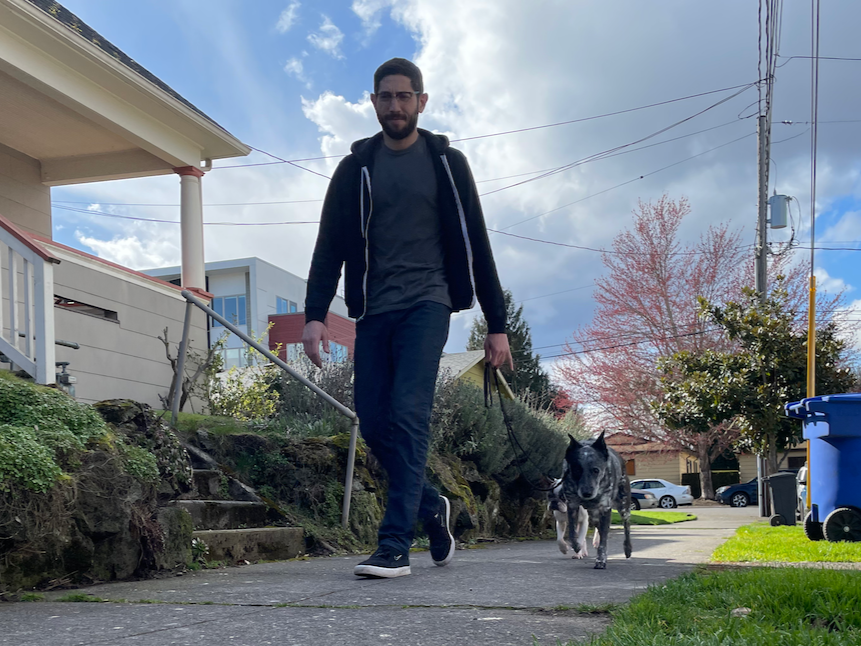
Sound familiar?
Reactivity isn't really a walk problem. It's a foundation problem that shows up loudest on the walk.
You walk at weird hours
Early mornings, late nights, empty streets. Anything to avoid running into another dog.
One trigger and it’s over
Barking, lunging, spinning at the end of the leash. You can't get through to them.
You've tried the usual advice
Treats, distance, avoiding triggers. It helps a little, but nothing really changes.
What's inside
7 things I'd do if I were starting today
Most of this work happens at home and right outside your front door, long before your dog ever sees a trigger.
1 - Food Drive
Most dogs won't eat outside. How to build a dog who takes food anywhere, even around triggers.
3 - Obedience training
If they can't listen around small distractions, they won't listen around big ones. Build the habit first.
5 - Daily calm practice
So much reactivity comes from an overactive mind. Place and crate time give it a chance to settle.
7- Distance management
The look, turn away, "yes" sequence that teaches your dog to disengage, and how to close the gap over time.
2 - Leash skills
If your dog fights the leash, you can't guide them away. Plus why the right leash makes fixating harder.
4 - Impulse control
A reaction is an impulse problem. Patience at the crate, the door, and on a down stay builds the leverage.
6 - Instinctual fulfillment
The walk alone isn't enough. Games like tug and the flirt pole give real drives a real outlet.
Who made this
Hi, I'm Ruben. I own Kindred Dog PDX here in Portland. I've spent over 12 years training family dogs, more than 700 of them. Nothing fancy. Just practical skills that make life with your dog easier. Everything I teach starts with relationship and structure. Get the foundation right and the surface problems, like pulling, usually fade on their own. This guide is the same starting point I use with my private clients.
11+
years training
700+
dogs trained

Quick questions
Is this really free?
1
Yes. Enter your email and both guides land in your inbox right away.
Yes. Leash reactivity is the most common kind, and it's exactly what this guide is built around.
2
My dog is only reactive on leash. Is this for me?
Do I have to stop walking my dog?
No. You'll change what the walk looks like for a while, not get rid of it.
3
What if my dog has bitten someone?
5 What if I want more help?
Start with the guide, but please get hands on help too. A bite history is worth working through with a trainer in person.
4
If you're in Portland, I offer private lessons. If you're farther away, my online course Calm and Connected walks you through the full plan.
You don't have to keep walking at midnight.
Start with step 1 this week. The work you do at home is what shows up on the street.