Dog Not Responding to Training? Here's Why
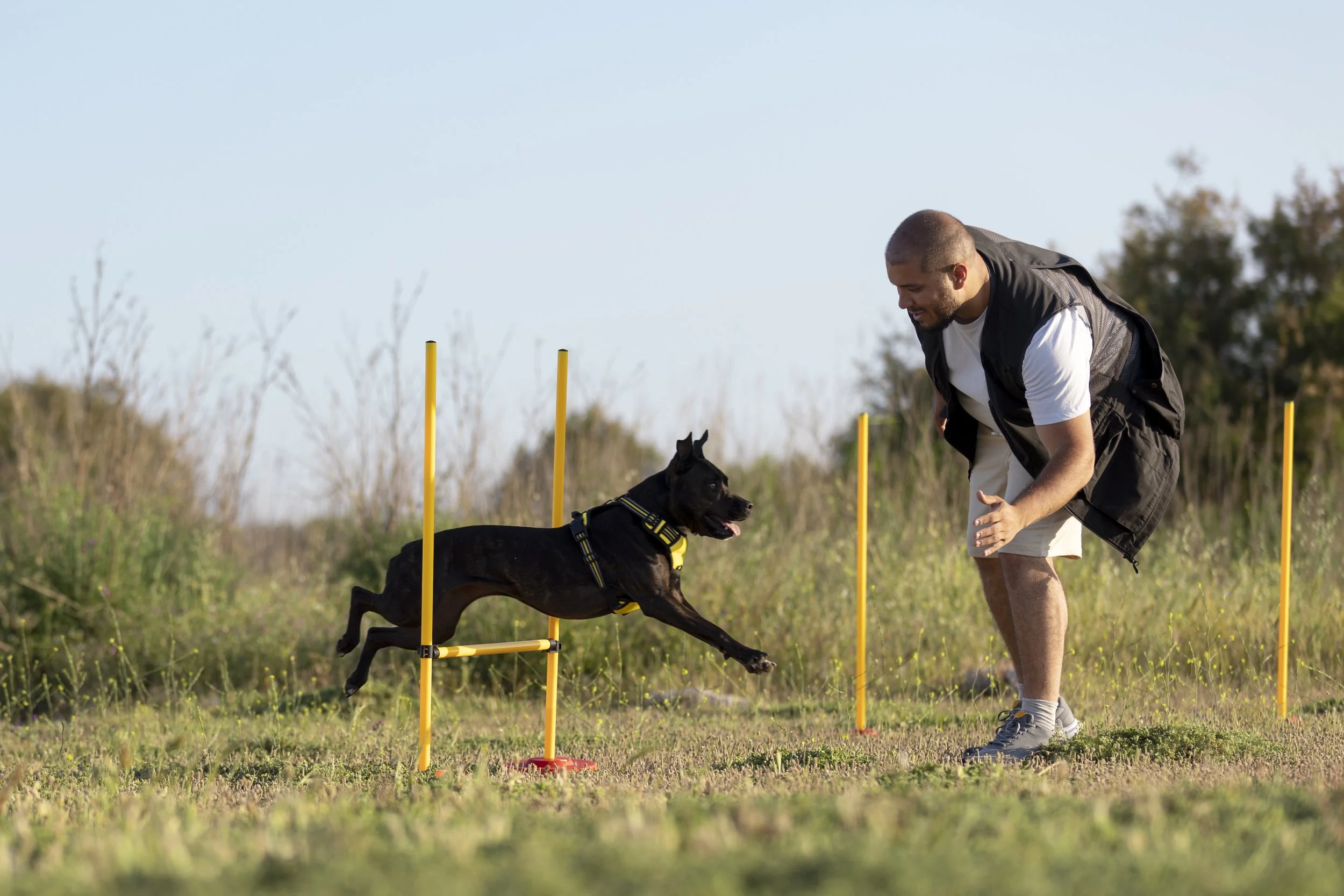
You've been at this for weeks. You've got the clicker, a bag full of treats, and you've watched every YouTube training video that promised quick results. You practice "sit" every single day. And yet, when it really matters, when guests arrive at the door or when you're trying to leave the dog park, your dog acts like they've never heard the word before.
Sound familiar?
Here's what most frustrated dog parents don't realize: when your dog isn't responding to training, they're not being stubborn or spiteful. They're communicating that something in your training approach isn't connecting with how they learn. And the good news? Once you understand what's actually happening, you can fix it.
Why Your Training Efforts Might Be Falling Flat
When training falls apart, it's easy to blame the dog. "He's just stubborn." "She's too independent." "Maybe he's not smart enough to learn this."
But here's the truth that might sting a little: the breakdown is rarely about your dog's intelligence or willingness to cooperate. It's about miscommunication, mismatched methods, or missing pieces in the training puzzle.
Learning happens when a dog's brain can form clear, consistent associations between an action and an outcome. When those associations get muddied by inconsistency, poor timing, environmental overwhelm, or physical discomfort, the training connection breaks down.
The scientific reality is that dogs are constantly learning. They're just not always learning what we think we're teaching them. When you accidentally reward your dog for jumping by giving them attention (even negative attention), they're learning that jumping works. When you say "come" but don't follow through when they ignore you, they're learning that "come" is optional.
Common Mistakes That Sabotage Dog Training Success
Inconsistent Communication Creates Confusion, Not Defiance
Here's a scenario that plays out in homes every single day: Mom uses "down" to mean lie down. Dad uses "down" to mean get off the furniture. The kids use "down" as a general expression of disapproval when the dog does anything they don't like.
Your dog isn't defying you. They literally cannot form a reliable association when the same word means different things.
Inconsistency extends far beyond verbal cues, too. Your body language tells a story that often contradicts your words. You say "stay" while pointing at your dog, but you're leaning forward with your weight shifted toward them. To your dog, that forward lean is an invitation to approach.
The solution? Create a family command chart where you write down the exact verbal cue for each behavior, the hand signal that accompanies it, your body posture, and the exact reward timing. Then practice together as a family. Consistency across all family members can literally double your training success rate.
Poor Session Structure Leads to Mental Fatigue
Picture this: You settle in for a 30-minute training session because you're determined to finally master "stay." You drill the command over and over, repeating it dozens of times, getting increasingly frustrated when your dog starts losing focus after ten minutes.
Here's what the research tells us: dogs learn best in focused bursts of 3-5 minutes, not extended drilling sessions. After that initial window, their attention wanes, stress hormones increase, and the quality of learning plummets.
Effective training sessions follow a specific pattern:
Warm-up (30 seconds): Start with easy, known commands to build confidence
New challenge (2-3 minutes): Introduce one new element or work on the difficult behavior
Success ending (30 seconds): Return to easy commands your dog knows well
Play break: Release your dog to decompress and celebrate
Studies on canine learning have shown that multiple short sessions throughout the day outperform one long session by up to 40% in retention rates.
Reward Timing and Value Mismatches Break the Learning Connection
You ask your dog to sit. Three seconds later, after you've fumbled with the treat bag and grabbed a piece of kibble, you deliver the reward.
Those three seconds? They might as well be three hours in dog-learning time.
The "three-second rule" is sacred in dog training: rewards delivered more than three seconds after the desired behavior fail to create strong neural associations. Your dog's brain needs to link the action and the reward immediately.
But timing isn't the only issue. Reward value matters enormously. Generic kibble might work when you're training "sit" in your quiet kitchen with zero distractions. But at the dog park? That same piece of kibble is worthless currency.
High-value rewards for challenging situations include small pieces of real chicken, string cheese, freeze-dried liver treats, or hot dog slices.
And here's something many trainers miss: not all dogs are food-motivated. Some dogs couldn't care less about treats but will work their hearts out for a chance to chase a tennis ball. Others live for verbal praise delivered with genuine enthusiasm.
Conduct a motivation audit. Offer your dog choices and note what they pick. Use those top-tier motivators strategically for the hardest behaviors and most distracting environments.
Understanding Your Dog's Learning Readiness
Physical State Directly Impacts Cognitive Function
A dog who hasn't been exercised is flooded with pent-up energy and stress hormones that essentially block learning pathways. Their brain is screaming, "RUN! PLAY! MOVE!" There's no mental bandwidth left for processing commands.
Conversely, an exhausted dog can't learn either. The sweet spot is "calmly alert," typically about 30 minutes after moderate exercise.
Developmental Stage and Breed Genetics Shape Learning Capacity
Puppies under 14 weeks are in critical socialization periods where their brains are specifically wired to absorb information. But they're also easily overwhelmed and have extremely short attention spans.
Adolescent dogs (roughly 6-18 months) are experiencing hormonal upheaval similar to human teenagers. One day they know every command perfectly; the next day they act like you're speaking gibberish. This is normal, frustrating, and temporary.
Breed genetics play a massive role:
Herding breeds (Border Collies, Australian Shepherds) often learn commands in just 5 repetitions. But they also outsmart inconsistent training and become anxious without sufficient mental stimulation.
Hounds and independent breeds (Beagles, Huskies, Shiba Inus) were selectively bred to work independently. They may need 25-40 repetitions of a command and significantly higher-value motivation. This isn't stupidity; it's genetic purpose conflicting with modern obedience expectations.
Medical Issues Frequently Masquerade as Behavioral Problems
What looks like training resistance may actually be physical pain or cognitive dysfunction.
A dog with undiagnosed hip dysplasia isn't being stubborn when they refuse to sit. Sitting hurts. A dog with an ear infection isn't ignoring your recall because they're independent; they literally can't hear you properly.
Other medical culprits include arthritis, vision problems, thyroid imbalances, and dental pain.
If your previously trained dog regresses suddenly, rule out medical causes before assuming it's behavioral.
Environmental and Emotional Barriers to Learning
Distraction Levels Must Match Your Dog's Training Stage
Here's one of the most common training errors: expecting too much, too fast, in too challenging an environment.
You spent two weeks teaching your dog a reliable "sit" in your living room. So you head to the dog park, where there are seventeen other dogs playing, children squealing, and squirrels darting up trees. You ask for a sit. Your dog stares at you blankly.
And they do know the command, in your living room. But you've just increased all three "D's" simultaneously: Duration (how long they must perform), Distance (how far from you), and Distraction (environmental difficulty).
The cardinal rule of the Three D's: increase only one at a time.
This progression takes weeks, not days. Rushing it is the fastest path to a dog who "doesn't listen outside."
Your Emotional State Becomes Your Dog's Emotional State
Dogs can detect cortisol (your stress hormone) in your sweat. When you're frustrated, anxious, or tense, your dog knows, and it affects their ability to learn.
If you feel your patience wearing thin, end the session positively with an easy command your dog knows, reward them generously, and walk away. One frustrated training session can create negative associations that take weeks to overcome
Science-Based Strategies to Break Through Training Plateaus
Use Shaping and Successive Approximation
Instead of expecting a complete behavior, you reinforce small improvements toward your goal. You're essentially breaking down complex behaviors into tiny, achievable steps.
Example for teaching "stay":
Day 1-2: Reward for one second
Day 3-4: Two seconds
Day 5-7: Three to five seconds
Week 2: Add tiny distractions
Week 3: Take one small step away
Week 4: Combine duration and distance gradually
Using a clicker or verbal marker (like "yes!") helps you mark the exact moment of success so your dog knows precisely which action earned the reward.
Evaluate and Refine Your Training Methodology
Positive reinforcement has the strongest scientific backing for effectiveness, long-term retention, and maintaining the human-dog bond. But implementation matters.
Video yourself training and watch it back. You'll catch timing errors, mixed signals, and body language contradictions you never noticed in the moment.
Consider whether your dog needs more mental enrichment outside of formal training sessions. Dogs who get puzzle feeders, sniff walks, and novel experiences show improved focus during training.
Knowing When Professional Guidance Makes the Difference
You should strongly consider working with a qualified trainer if:
You've been consistent for 4-6 weeks with minimal improvement
Your dog shows fear responses (tucked tail, whale eye, lip licking, freezing) during training
Your dog displays reactive behaviors (lunging, excessive barking, aggression)
You're feeling overwhelmed or unsure whether you're doing more harm than good
At Kindred Dog PDX, we focus on understanding why your dog isn't responding rather than applying one-size-fits-all solutions. Every dog is an individual with unique motivations, challenges, and learning preferences.
Building Long-Term Success Through Consistency and Connection
Training challenges aren't failures. They're the sources of information.
When your dog doesn't respond as expected, they're telling you something valuable. Maybe they don't understand what you want. Maybe the environment is too overwhelming. Maybe that reward isn't motivating enough for this level of difficulty.
The goal of training isn't to achieve perfect robotic obedience. It's to build a dog who trusts you enough to choose cooperation, who understands what you're asking, and who finds working with you rewarding.
Consistency matters more than perfection. Three 5-minute training sessions most days of the week, done with good technique and positive energy, will outperform sporadic intensive sessions every time.
Progress isn't linear. You'll have breakthrough days and regression days. That's normal. What matters is the overall trend over weeks and months.
And remember: your dog is trying. They're not plotting against you. Your job is to make success easy, communication clear, and cooperation rewarding.
FAQs
-
For basic commands in low-distraction environments, you might see initial understanding within a few days to a week. However, reliable performance takes 4-8 weeks of daily practice. Complex behaviors or behavioral issues can take months. If you're not seeing any progress after 4-6 weeks of consistent training, it's time to reassess your approach or consult a professional.
-
Absolutely! Adult and senior dogs can learn new behaviors, often with more focus than puppies. Rescue dogs may take longer to build trust and confidence, but they're fully capable of learning. The key is patience, consistency, and adjusting expectations to account for any physical limitations or trauma history.
-
Hide the treats while training in your pocket or treat pouch, not in your hand. Ask for the behavior first, then produce the reward after they comply. Start varying the reward schedule: sometimes treat, sometimes praise, sometimes play. This variable reinforcement keeps your dog engaged without constant bribery.
-
A confused dog will show signs of trying but failing: offering different behaviors, looking at you questioningly, or giving stress signals like lip licking. A truly stubborn dog (which is rare) knows what you want and consciously chooses not to comply. The solution for confusion is clearer communication. The solution for stubbornness is higher-value rewards.
-
This is called a "failure to generalize." Dogs don't automatically understand that "sit" in the living room is the same as "sit" at the park. You need to actively teach each behavior in multiple environments, starting with low-distraction settings and gradually increasing difficulty.
-
It's not a myth, but it's often misunderstood. All dogs can learn, but different breeds were developed for different purposes. Herding breeds learn quickly because they were bred to take direction. Hounds were bred to follow their noses independently. "Harder to train" often means "requires different motivation and more patience." Understanding your breed's original purpose helps you work with their genetics instead of against them.